
Millennials feel strongly about the society that they live in and will not shy away from working to make it better. The key is to engage them, understand their perspective and design high impact CSR programs on a sustained basis.
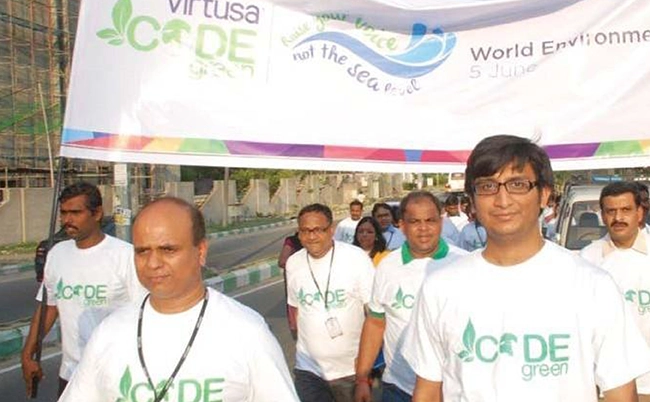
There is a fallacy about the millennials or Gen Y (those born after 1982) – that they are self- obsessed, self-indulgent lot that does not care much about the larger good of the society. But like several other misconceptions about this generation, this belief too is not true. In fact, they strongly feel about the social causes they espouse, more than the baby boomers. The millennials have witnessed the high trajectory economy in which corporate honchos like Ratan Tata, Azim Premji, Grandhi Mallikarjuna Rao who have chosen to commit substantial part of their personal wealth towards Corporate Social Responsibility (CSR). Millennial alumni of premier institutions like IITs and IIMs have also contributed significantly to create infrastructure at their alma mater. Most of the participants at events like Pinkathon or Go Green initiatives that champion causes of women empowerment, environment etc are millennials. Several of these millennials have just one sibling or less and hence demonstrate the urge to give back to the society that they fall upon. The young working professionals, in fact, go beyond the call of duty, working with NGOs on weekends to support social causes, take a sabbatical to work with organizations like Teach India, and even design technological interventions, using their skills. This perspective is critical to understanding and aligning millennials with a Corporate Social Responsibility (CSR) movement.
Engaging millennials through social media, crowd sourcing
Leveraging social media is critical to engaging millennials, as they are highly dependent on social media to get and share information. If they are able to associate with a CSR initiative, they will spread the word over social (Facebook, Twitter, etc) and Instant Messaging (IM) platforms ( WhatsApp, WeChat etc) using their smartphones. Thus, they become endorsers for a cause or CSR program if engaged in the right way over mobile, social and IM platforms. Organizations need to understand these traits of the ‘mobile-first generation’ and accordingly engage them for CSR. At Virtusa, we use our own social platform, RAVE, which is used to thank, recognize and reward employee contributions towards CSR activities. This platform has been combined with gamification, badges and leaderboards to further enhance the millennial engagement. Millennials seek instant gratification
which means that it is crucial to share updates about the difference they were able to create. Such a move will ensure repeat participation during later stages of the CSR activity.
Social media also provides scope for crowd sourcing of unique ideas – to shortlist causes to be associated with, to announce actual rollout and the resultant impact. It is advisable to identify the social causes that an organization wants to advocate. It is not possible for any organization to work on all the social fronts – be it education, poverty alleviation, environment protection etc. Hence, it makes sense for HR teams to crowd source ideas from their workforce on social causes they want to work on, keeping in line with the vision, values and beliefs of the organization and its founders. This will make it more compelling for millennial employees to participate in the CSR initiatives. A sense of ownership also comes into a play in such a scenario, something the young professionals relish and revel in.
Social media awareness campaigns on CSR can also help organizations in attracting talent as it is one of the factors considered by millennials while joining employment. It is also a good idea for HR teams to brief new employees about the CSR initiatives of the organization during induction as this will help to create a connect
Design innovative CSR initiatives to attract millennials
The millennial generation is deep-rooted with innovation and technological interventions as a way of life. They do not wish to indulge in lip service by involving themselves with a one-off activity. They also do not appreciate unplanned, unstructured CSR programs. They need to see scale in the initiative. They are more than willing to be part of long and sustained campaigns that have defined objectives.
Considering all these factors, it is pertinent to design CSR programs in an innovative manner. For instance, creating an e-learning module based on gamification for underprivileged children to teach them math skills. Millennials believe technology can solve many of the problems faced by the society and rightly so. Innovative initiatives like incubating and funding social enterprises that make a difference to the lives of a section of the society is another example. At Virtusa, we developed an app for the Corporation of Chennai that ensures public utilities like parks and toilets are well maintained and provide redressal mechanisms in case they are found to be lacking. It is also recommended to put in place a CSR committee that can engage with NGOs and Government wings to respond to natural calamities like floods, earthquakes, etc. Millennials consume news on the go on their smart devices and feel the need to respond to such calamities in a timely manner. Organizations cannot afford to ignore putting in place such mechanisms and processes.
Also, millennials will look forward to their leaders – team, business etc – to lead from the front with their active involvement. There has to be a top-down approach for all CSR programs being implemented by an organization. This will underline the commitment of the senior management and also their expectations from their teams in participating and ensuring success of the initiative.
Delineate CSR and sustainability
It is important to clearly delineate CSR from sustainability initiatives of an organization. The communication outreach to millennial employees also needs to reflect this. They need to know whether they contributing to a social cause with significant impact or to create sustainable practices for the long term. Observance of Earth Hour or move o encourage employees to cycle to work cannot be clubbed under CSR. Once employees know what they are contributing to, they will be clear in their minds on the efforts they want to put in. Such delineation will demonstrate to the millennial employees, the seriousness of the senior management in fulfilling their social responsibility. The new norms for CSR by the Government of India also mandate that CSR and sustainability activities should not be mixed up.
Above all, it is vital that there are no barriers to participation in CSR – set low barriers for involvement and offer a spectrum of participation opportunities. Across the board, there has to be a lot of communication about a CSR event much before it takes off. Since most of these activities happen on a weekend, adequate time must be given so as to draw a firm commitment from millennial employees. It is also important to ensure continuity of social causes espoused and identifying employees who care deeply about a certain cause. Such employees should also be recognized and encouraged so that they become icons for other employees to follow. Create leaderboards to celebrate the individual contribution to CSR programs. A narrative capturing the entire corporate story of contribution to social causes revealed through campaigns across social media will also instill a greater pride among millennial employees.
Millennials feel strongly about the society that they live in and will not shy away from working to make it better. The key is to engage them, understand their perspective and design high impact CSR programs on a sustained basis.